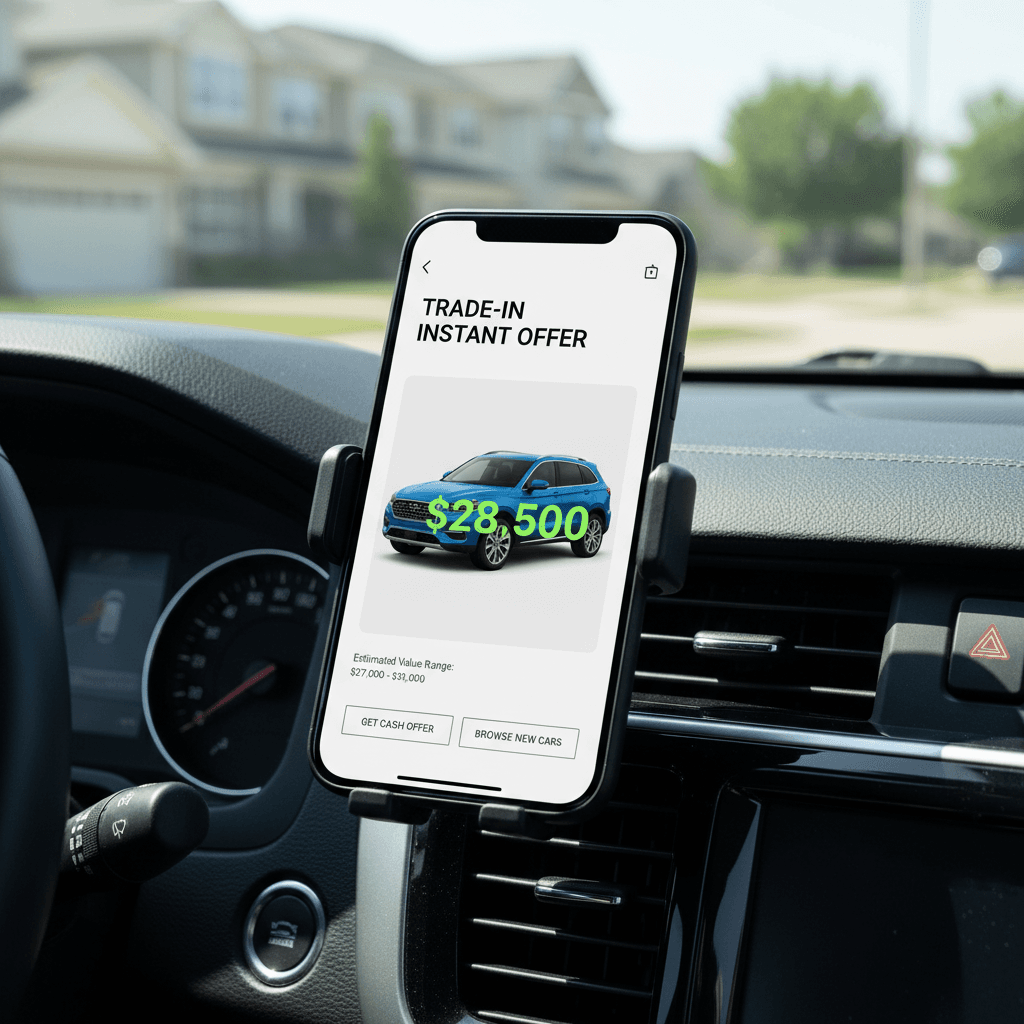
A car buying advocate provides expert negotiation and handles complex paperwork to ensure you receive a fair price without the stress of dealership tactics. When weighing a car buying advocate vs doing it yourself, the primary benefit is the advocate's ability to uncover hidden savings and manage every detail of the transaction. This professional representation saves significant time and often results in better financial outcomes than solo research.
Most car buyers spend twenty hours researching online only to walk into a dealership and feel completely outmatched. You might have your spreadsheets and local listings ready, but the sinking feeling that you are missing a hidden fee or overpaying for a warranty remains. This gap between information and execution is where most DIY efforts stall. Access to Google does not equate to having real time market data or an intimate understanding of how sales managers structure deals behind the scenes. In this guide, we break down exactly what a professional car buying advocate does that a self-guided search simply cannot. We will examine the limitations of public data, the mechanics of the 3000 Rule, and why the finance office is where most DIY savings disappear. Ultimately, you will understand the true cost versus value breakdown of hiring a professional to navigate this complex transaction.
Car Buying Advocate vs Doing It Yourself: Understanding the Two Paths

Navigating the choice between a car buying advocate vs doing it yourself requires a clear understanding of the tools and access each path provides. The DIY approach places the burden of research and negotiation entirely on the consumer. These buyers typically rely on public-facing valuation tools like Kelley Blue Book or Edmunds and spend hours scouring local dealership websites for inventory. While this method seems to save money by avoiding a service fee, it often leaves the buyer vulnerable to market adjustments and time-wasting dealership tactics.
In contrast, a car buying advocate acts as a professional representative. Rather than relying on retail listing prices, an advocate utilizes industry-specific data, including wholesale auction trends and real-time inventory movements. By leveraging established dealership relationships and price negotiation expertise, they bypass the traditional sales floor experience.
Online forums are often filled with skepticism, with users asking if they can simply do the work themselves to save the upfront cost. While a motivated consumer can certainly find a vehicle, the car buying concierge service model focuses on the total financial outcome. The DIY path frequently results in hidden costs, such as predatory finance markups or mandatory protection packages; these often exceed the price of professional representation. Understanding how a concierge works is the first step in recognizing that a lower sticker price does not always equate to a better deal.
Market Data vs Google Search: Why Your Research Has Limits
The discrepancy between public listing prices and actual transaction values is the primary reason the comparison of a car buying advocate vs doing it yourself often favors professional help. Most DIY research begins on third-party aggregators or dealership websites. These platforms display asking prices designed to drive foot traffic, not to reflect the final out-the-door cost. These figures are frequently bait-and-switch tactics, masking mandatory add-ons like $3,000 markups for nitrogen-filled tires, VIN etching, or paint protection packages that only appear once a buyer is sitting in the showroom.
An advocate bypasses these consumer-facing portals by utilizing professional-grade tools. While a DIYer looks at Kelley Blue Book to see what happened last month, an advocate accesses real-time auction data and wholesale market reports to see what the same model sold for yesterday. This access includes behind-the-curtain dealer incentives, such as unadvertised manufacturer-to-dealer cash or volume-based stair-step bonuses. These incentives allow dealers to sell a car for what looks like a loss to the public while still remaining profitable.
Data Source | DIY Researcher | Car Buying Advocate |
|---|---|---|
Pricing | Retail asking price (MSRP) | Wholesale auction data |
Incentives | Publicly advertised rebates | Dealer-direct cash and volume bonuses |
Inventory | Public website listings | Real-time internal inventory movement |
Accuracy | Lagging market trends (30+ days) | Current desk-level market conditions |
Understanding these market movements allows an advocate to identify which dealerships are motivated to move units to hit a monthly quota. This real-time intelligence is a core component of how a concierge works, providing a level of insight that a standard Google search cannot replicate. DIY research tells you what happened in the past; an advocate knows exactly what is happening at the sales desk today.
The 3000 Rule and Dealer Games: Why DIY Negotiating Often Stalls

The "$3000 rule" often surfaces in online forums as a baseline for a good deal, suggesting buyers should aim for $3,000 off MSRP or a similar bump in trade-in value. In a volatile market, this rule of thumb is frequently useless. Dealership margins vary wildly between a base model sedan and a high demand SUV. Relying on arbitrary figures often causes a DIY negotiation to stall because the request is not grounded in the actual dealer invoice or current market supply data. When the dealer knows your number is a guess, they gain the upper hand.
When comparing a car buying advocate vs doing it yourself, the most significant difference is how time is spent. A common complaint on Reddit involves the dealership marathon. DIY buyers often spend three hours or more in a showroom, only to discover the advertised price applied to a different trim level or included unachievable rebates. This time is often intentionally wasted while a sales representative consults the manager, a tactic designed to weary the buyer into accepting sub-optimal terms.
An advocate removes this friction by performing the heavy lifting before you ever leave your house. Using price negotiation expertise, an advocate secures a binding out-the-door price that includes all taxes, registration, and documentation fees. This eliminates the shell game where a dealer agrees to a sales price but adds $2,500 in mandatory fees for nitrogen, VIN etching, or ceramic coating once the buyer is already committed to the purchase.
Interaction Step | DIY Negotiator | Car Buying Advocate |
|---|---|---|
Pricing Foundation | Arbitrary rules of thumb | Invoice-based market data |
Time Investment | 3 to 6 hours at the dealership | 0 hours; price set remotely |
Price Certainty | Subject to manager approval | Finalized out-the-door quote |
Hidden Fees | Discovered in the cubicle | Removed during initial vetting |
This proactive stance is a hallmark of how a concierge works. By the time you arrive at the dealership, the only thing left to do is a final inspection and a signature. This professional car buying concierge service approach ensures that the dealer games of disappearing sales reps and mystery markups never even begin.
The F&I Room: Where DIYers Lose Most of Their Savings
Securing a competitive sales price is only half the battle. In the debate of car buying advocate vs doing it yourself, the Finance and Insurance (F&I) office is where the DIY approach most frequently collapses. Many buyers celebrate a hard-won discount at the sales desk, only to forfeit every cent of those savings minutes later. The F&I manager is often the most skilled negotiator in the building, tasked with recouping front-end losses through back-end profit.
For the DIYer, this manifests as interest rate markups. A dealer may be approved for a 5% loan, known as the buy rate, but present the customer with a 7% offer, the sell rate, pocketing the difference as pure profit over the life of the loan. Beyond financing, the F&I room is the birthplace of high-margin add-ons like $500 VIN etching, $900 GAP insurance, and $3,000 extended warranties. Without price negotiation expertise, these items are often presented as required or pre-installed; this makes them difficult for an exhausted buyer to challenge after hours of waiting.
An advocate changes this dynamic by vetting the final contract before a pen ever touches paper. This oversight is a critical part of how a concierge works. A professional ensures that the out-the-door price remains static and that no predatory products are buried in the fine print.
Profit Center | DIY Buyer Risk | Advocate Protection |
|---|---|---|
Interest Rate | 1% to 3% markup over the bank's buy rate | Verification of the true competitive rate |
Ancillary Products | High-pressure sales for etching or nitrogen | Pre-emptive removal of non-essential add-ons |
Service Contracts | Overpriced warranties with high commissions | Analysis of value vs. third-party alternatives |
Contract Review | Signed under pressure in a small office | Reviewed and approved remotely before signing |
By utilizing a car buying concierge service, clients bypass the stress of the back-room sell. The advocate's role is to ensure the deal negotiated on the showroom floor actually makes it into the final loan agreement without being diluted by hidden fees.
Trade In Negotiations: The Second Battle of the DIY Process
Once the financing terms are vetted, the dealership often attempts to recoup its margins through the trade-in appraisal. In the dynamic of a car buying advocate vs doing it yourself, the trade-in is frequently the most misunderstood part of the transaction. Many DIY buyers fall into the trap of "allowance math," where a dealer appears to offer a high trade-in value only to silently remove a corresponding discount on the new vehicle. This tactic allows the dealer to claw back equity that the buyer assumes they have secured.
An advocate eliminates this confusion by treating the trade-in as a strictly separate transaction. Using price negotiation expertise, the advocate establishes a concrete cash value for the trade based on current wholesale auction data and regional demand before finalized pricing for the new car is even discussed. This ensures the trade-in value is anchored to the objective market rather than a dealer's internal profit requirements. Understanding how a concierge works means recognizing that every dollar of your car's equity is protected from being used as a bargaining chip to offset a discount elsewhere.
Negotiation Element | DIY Trade-In Approach | Advocate Trade-In Strategy |
|---|---|---|
Transaction Structure | Bundled with the new car purchase | Treated as a standalone sale |
Valuation Source | Dealer's subjective appraisal | Real-time wholesale and auction data |
Profit Protection | Equity used to offset "discounts" | Guaranteed market-clearing price |
Verification | Relies on dealer honesty | Triple-bid verification process |
Is a Car Buying Service Worth It? A Cost vs Value Breakdown

Determining if professional representation is worth the investment requires an objective look at the math behind the purchase. While skeptics on forums often argue that a service fee simply adds to the vehicle's cost, this perspective ignores the massive spread between a retail asking price and a true market clearing price. A typical car buying concierge service charges between $500 and $1,000. In exchange, clients frequently see savings ranging from $2,000 to $5,000 by stripping away dealer markups, predatory add-ons, and interest rate spreads that most DIYers unknowingly accept.
The value proposition extends beyond the purchase price into the realm of time and labor. The average DIY buyer spends 10 to 20 hours researching models, contacting multiple dealerships, and sitting in showroom cubicles. At YCBA, our price negotiation expertise condenses this entire process into a single review of a finalized, out the door contract. We combat the broker markup concerns often found in online discussions by maintaining a strict commitment to transparency and flat fees. There are no mystery surcharges or hidden commissions from dealerships.
Investment Factor | DIY Approach Cost | YCBA Advocate Value |
|---|---|---|
Service Fee | $0 upfront | $500 to $1,000 (flat fee) |
Time Labor | 10 to 20+ hours | Near zero for the client |
Negotiation Loss | $1,500+ in fees and markups | Market-best pricing secured |
Financing Cost | 1% to 2% rate markup | Verified bank buy rates |
Understanding how a concierge works means viewing the service not as an added expense, but as a financial filter. By removing the friction and the dealer tax that often plagues the car buying advocate vs doing it yourself comparison, the service pays for itself through both direct savings and the recovery of your personal time.