A car buying advocate new vs used car provides a strategic advantage by balancing the lower interest rates of new models against the reduced purchase prices of pre-owned vehicles. These professionals manage complex negotiations and financing details to secure the best value for your specific budget; hiring an advocate ensures you avoid hidden costs and maximize savings whether you choose a factory-fresh or previously owned car.
Staring at a dealer lot often feels like choosing between two expensive risks. You either swallow the immediate depreciation of a new vehicle or inherit the hidden mechanical history of a used one. In the current market, this decision is further complicated by fluctuating interest rates and shifting inventory levels that make traditional advice obsolete. Choosing the wrong path does not just cost you at the signing desk; it drains your wealth through financing traps and maintenance surprises over several years. This guide breaks down the financial realities of the 2024 and 2025 market. You will learn how a professional advocate identifies hidden value in used inventory, avoids the technical pitfalls of new models, and applies a strategic framework to ensure you secure the best possible return on your investment.
The Great Debate: New vs Used Car Financial Realities in 2024 and 2025

The automotive market has entered a period of sustained high pricing, leaving many buyers feeling the pressure of increased monthly payments. As of 2024, the median price for a new vehicle has reached approximately $47,000. In comparison, a used vehicle aged one to five years sits at a median price of roughly $28,500. While this nearly $20,000 difference suggests a clear path for the budget-conscious, the financial reality of modern vehicle ownership is far more nuanced than a simple sticker price comparison.
A sophisticated buyer recognizes that the initial transaction is only the first variable in a long-term financial equation. Elements such as fluctuating interest rates, insurance premium adjustments, and upcoming maintenance intervals can quickly erode the perceived savings of a used model. On the other hand, the steep depreciation typical of new vehicles can become a significant liability if the ownership period is short. Every choice involves a trade-off between immediate capital expenditure and long-term operating costs.
Navigating these variables requires the objective perspective of a car buying advocate new vs used car expert. As a neutral third party, YCBA helps clients look past the glossy showroom floor to analyze the true fiscal impact of a purchase. By leveraging a concierge car buying service, you move from a position of uncertainty to one of data-backed confidence. Our process involves looking at the entire lifecycle of the vehicle, ensuring that negotiating the price is just one part of a broader strategy to protect your capital. We act as a filter, removing the emotional pressure of the dealership and replacing it with a practical, numbers-based framework for decision-making.
Buying a New Car: Modern Tech, Warranties, and the Depreciation Hit
Choosing a new vehicle is often an exercise in prioritizing reliability and cutting-edge features. The primary appeal lies in the comprehensive warranty coverage, which typically spans three years or 36,000 miles for bumper-to-bumper protection, alongside five-year powertrain coverage. This coverage removes the variable of unexpected repair costs from your monthly budget. Additionally, new models integrate the latest safety suites, such as advanced collision avoidance and semi-autonomous driving aids, alongside superior fuel efficiency from modern hybrid or electric drivetrains that may not be fully realized in older iterations.
However, this convenience comes at a heavy cost beyond the MSRP. The most aggressive depreciation occurs within the first 36 months of ownership. A vehicle can lose up to 20 percent of its value the moment it leaves the lot; by the end of year three, the total loss can approach 40 percent. For many buyers, the financial protection of Lemon Law is the deciding factor that justifies this cost. These state-level statutes provide a legal recourse if a vehicle has recurring, unfixable defects, offering a safeguard that is almost entirely absent in the private used market.
A car buying concierge adds value by scrutinizing the back-end of the new car deal. Dealerships frequently attempt to offset their narrow margins on new inventory by inflating the final price with mandatory add-ons like $500 nitrogen-filled tires, $1,000 ceramic coatings, or $800 interior protection packages. These items are high-margin fluff that erodes the inherent value of a new car. An advocate identifies these tactics early, ensuring the client pays for the engineering and the warranty, not the dealership's overhead disguised as protection. By stripping away these non-essential fees, the financial hit of that initial depreciation becomes far more manageable.
Buying a Used Car: Avoiding Depreciation and Finding Hidden Value
Purchasing a vehicle that has already endured its primary depreciation cycle is the most effective way to preserve your capital. By targeting a car that is three to five years old, you avoid the initial 20 to 30 percent value drop that occurs during the first few thousand miles. This price reduction scales into other areas of ownership; insurance premiums are typically lower because the insurer's replacement liability is reduced, and registration fees in many states are calculated based on the current market value rather than the original MSRP.
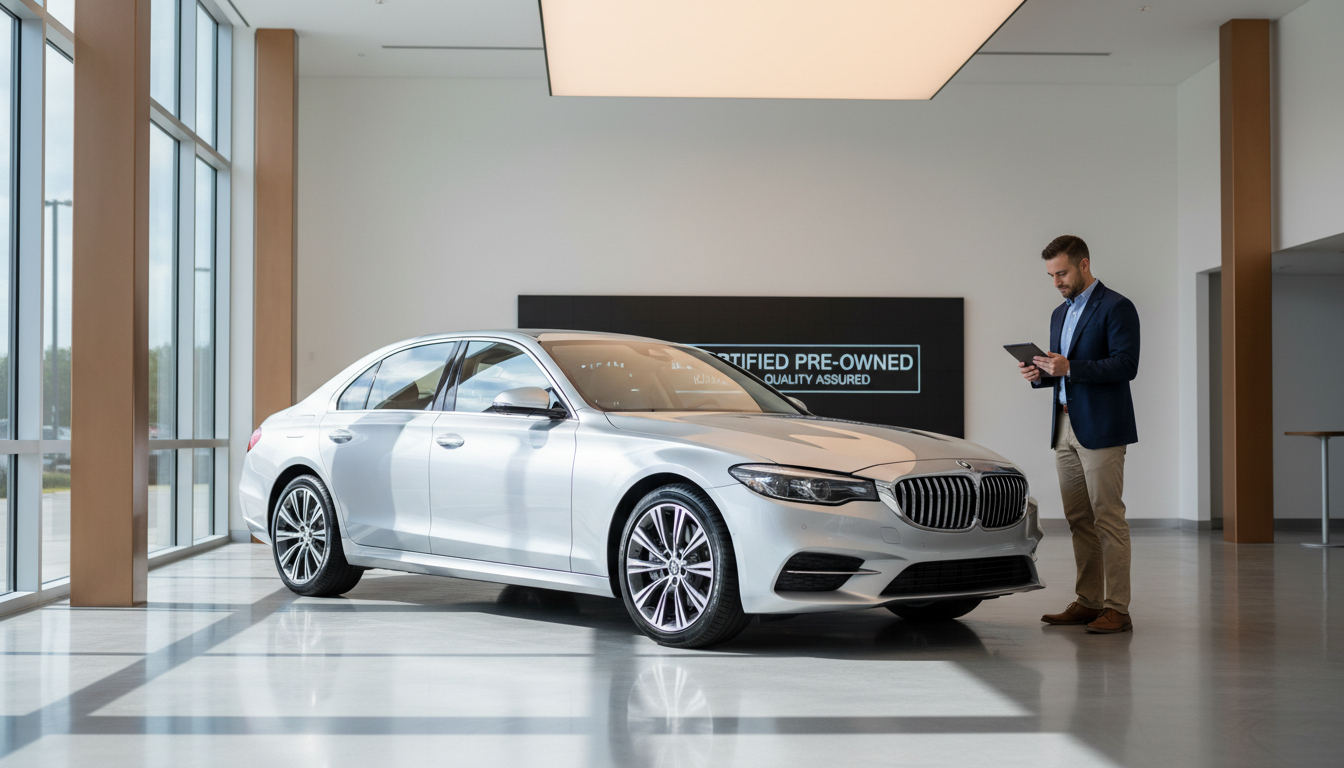
For clients who desire new car peace of mind without the new car price tag, Certified Pre-Owned (CPO) programs represent a strategic middle ground. These vehicles undergo manufacturer-mandated inspections and include extended limited warranties. While CPO units carry a premium over standard used cars, they offer a vetted history and a lower risk profile. By leveraging a concierge car buying service, you gain access to internal market data that identifies these undervalued gems before they are snatched up by retail browsers.
A significant area of hidden value lies in high-mileage vehicles, specifically those crossing the 100,000-mile threshold. While a casual buyer might see 100k miles as the end of a vehicle's life, a car buying advocate new vs used car expert views it through the lens of maintenance cycles. Modern engines and transmissions are frequently engineered to last 200,000 miles or more if maintained correctly. The risk at this mileage is not the number on the odometer, but deferred maintenance on critical components like timing belts, cooling systems, or suspension bushings.
When evaluating these units, YCBA researchers prioritize a comprehensive service history over a low price. A one-owner vehicle with 110,000 miles and a documented history of preventative fluid changes is often a better investment than a 70,000-mile vehicle with spotty maintenance. By focusing on these mechanical realities, we help clients secure reliable transportation at a fraction of the cost of a new model.
How a Car Buying Advocate Navigates the New vs Used Financing Trap

The choice between new and used is frequently decided not by the sticker price, but by the underlying financing structure. While a used vehicle may have a lower purchase price, the delta in new vs used car loan rates can significantly impact the final amount paid over the life of the loan. New vehicles often benefit from manufacturer-subvented financing, including promotional 0 percent or low-interest APRs designed to move inventory. In contrast, used car loans are subject to standard market rates, which are typically 2 to 5 percentage points higher.
A car buying advocate new vs used car expert prioritizes the total cost of ownership (TCO) over the simplified monthly payment offered by a dealership. Sales teams often focus on a specific monthly figure to distract buyers from high interest rates or extended 84-month terms that lead to negative equity. YCBA counters this by securing pre-approval from independent lenders or credit unions before any negotiating the price begins. This establishes a competitive baseline, preventing the dealership from adding a hidden markup to the interest rate for their own profit.
Financing Factor | New Vehicle | Used Vehicle (1-5 Years) |
|---|---|---|
Typical APR Range | 0% – 5.9% | 6.5% – 12% |
Lender Type | Captive (Manufacturer) | Traditional Banks / CUs |
Loan Term Flexibility | Up to 72-84 months | Usually capped at 60-72 |
Promotional Incentives | Cash rebates or low APR | Rarely available |
By analyzing these variables, a car buying concierge ensures the financing choice aligns with your long-term wealth rather than the dealership's commission structure. We verify that a promotional rate for a new car is not offset by the loss of significant cash rebates, providing a clear mathematical path to the most efficient purchase.
Red Flags an Advocate Spots: From Rental Cars to Salvage Titles

The search for a used vehicle often leads buyers toward prices that seem suspiciously low. These outliers usually carry hidden histories that a car buying advocate new vs used car expert is trained to identify. A common question we encounter is, "should I buy a used car that was a rental?" While rental fleets typically follow strict maintenance schedules, the high volume of different drivers and the potential for aggressive use leads to accelerated wear on components like transmissions and suspension systems. These vehicles are often professionally detailed to hide a hard life, making them appear like a bargain when they are actually a looming mechanical expense.
Even more dangerous is a used car with a salvage title. These vehicles are often rebranded as "rebuilt" to entice buyers, but they represent a significant financial trap. Most major insurers refuse to provide comprehensive coverage for them, and their resale value remains permanently suppressed regardless of their current condition. Our concierge car buying service goes beyond a surface level glance at a history report; we cross-reference title brands across state lines to detect "title washing" tactics. We evaluate structural integrity signals that a standard test drive cannot reveal, such as mismatched paint shades in the door jambs or non-OEM welds. By uncovering these red flags early, we ensure our clients avoid inheriting a liability disguised as a deal.
The Advocate Advantage: Strategic Negotiation for New vs Used
Expert negotiation is not about aggressive posturing; it is about leveraging specific data to dismantle dealership profit centers. When a car buying advocate new vs used car specialist approaches a new vehicle transaction, the primary target is the out the door price. Dealerships frequently attempt to protect their margins by embedding high markup items like $400 nitrogen tire fills or $1,200 ceramic coatings into the final sales contract. YCBA researchers identify these non-value add-ons immediately, demanding their removal or a corresponding reduction in the base price. By focusing on the total cost rather than the MSRP, we ensure the transaction remains transparent.
For used vehicles, the strategy shifts toward empirical condition and comparative market analysis. While new car pricing is anchored to a window sticker, used car pricing is fluid. We utilize real time market value data to challenge inflated dealer listings that do not reflect local inventory trends. Furthermore, we leverage the results of professional mechanical inspections as a precision tool for negotiating the price. If an inspection reveals an upcoming brake service or worn tires, our advocates translate those future costs into immediate price reductions. This dual approach, tailored to the specific inventory type, is the cornerstone of a professional concierge car buying service. It replaces standard haggling with a data driven process that dealerships cannot easily ignore.
Decision Framework: Should You Buy New or Used Right Now?
The final choice hinges on a cold calculation of utility versus expense. A primary benchmark used by experts is the $3000 rule for buying cars. This guideline suggests that if the cost of bringing a used vehicle up to a safe, reliable standard exceeds $3,000 in immediate repairs or deferred maintenance, the financial benefit of the lower purchase price is largely neutralized. In these scenarios, the advantage to buying a new car is significant. You receive federal Lemon Law protections, the most current collision-avoidance technology, and manufacturer-subvented interest rates that used inventory cannot replicate.
To determine the optimal path for your specific situation, evaluate your needs against these variables:
Decision Factor | Lean Toward New | Lean Toward Used |
|---|---|---|
Annual Mileage | 15,000+ miles (Warranty focus) | <12,000 miles (Lower wear) |
Retention Period | 7+ years (Dilutes depreciation) | 2 to 4 years (Lower entry cost) |
Maintenance Risk | Zero tolerance / Fixed budget | High tolerance / DIY capability |
Cash vs. Credit | Seeking promotional 0-4% APR | Paying cash to avoid high rates |
A car buying concierge removes the emotional fog of the showroom by applying these metrics to every potential VIN. As your car buying advocate new vs used car specialist, YCBA analyzes the specific depreciation curves and anticipated service cycles of each candidate. Our concierge car buying service ensures the final choice is rooted in fiscal logic. When we finish negotiating the price, you walk away with a vehicle that serves your lifestyle without compromising your financial future.